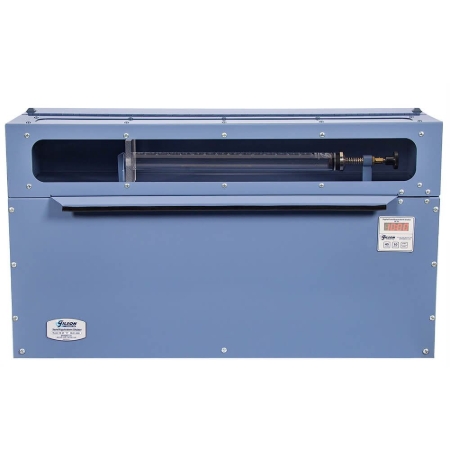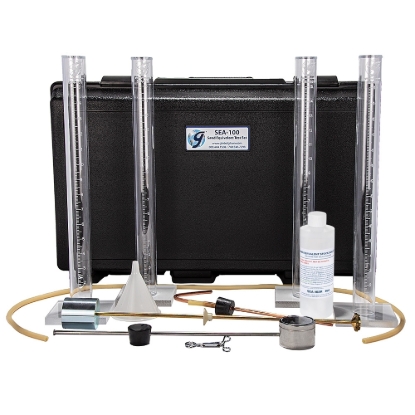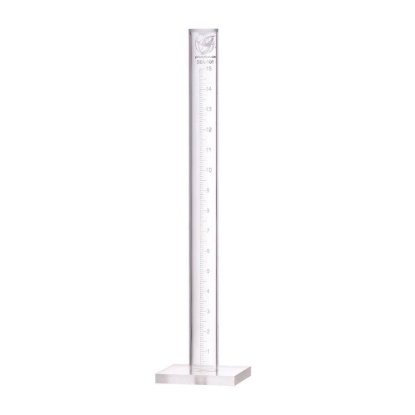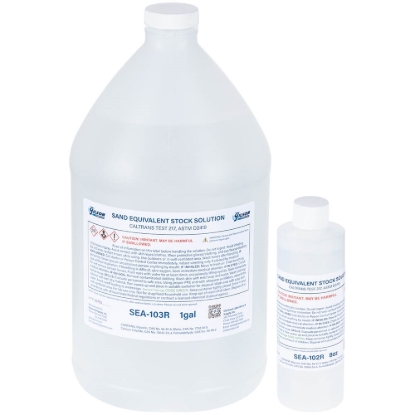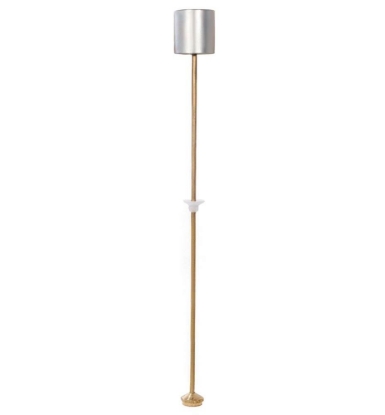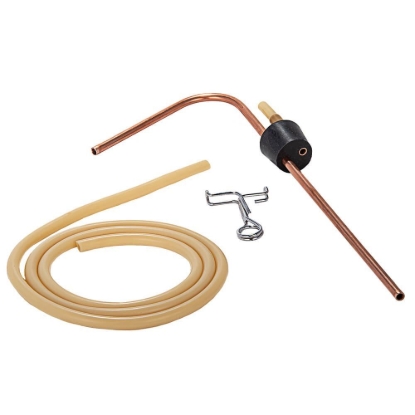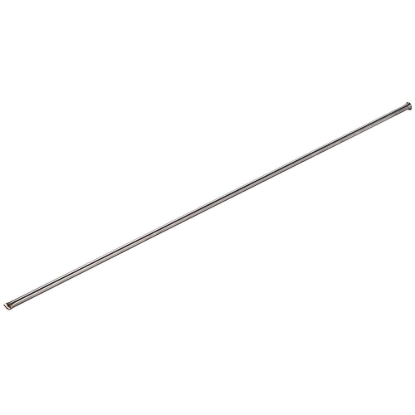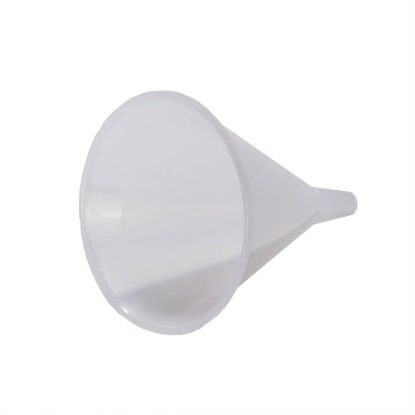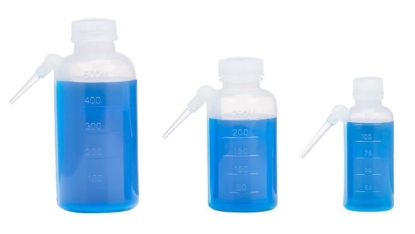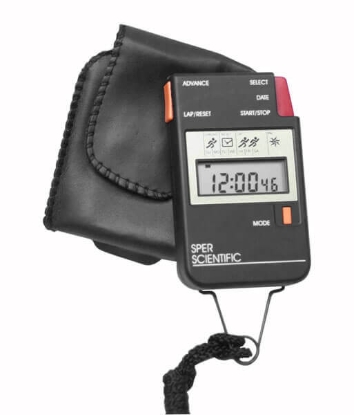
To run the test a sample is placed in a clear plastic cylinder with the sand equivalent solution, consisting of calcium chloride, formaldehyde, and glycerin. The cylinder is then agitated by hand agitation or with Gilson's Sand Equivalent Shakers which are proven to increase accuracy. After agitating the cylinder, it can stand for a sedimentation period. Readings are taken for the clay suspension and sand level. "Sand equivalent" is the sand reading divided by the clay reading x 100.
For more information regarding the test, check out our blog Sand Equivalent Test Method Explained: The Purpose and The Process.
For more information on Sand Equivalent Test Equipment, here are our related blogs: